
Beyond the Burden: Why Saying “I’m Sorry” Is So Hard (And How to Heal)
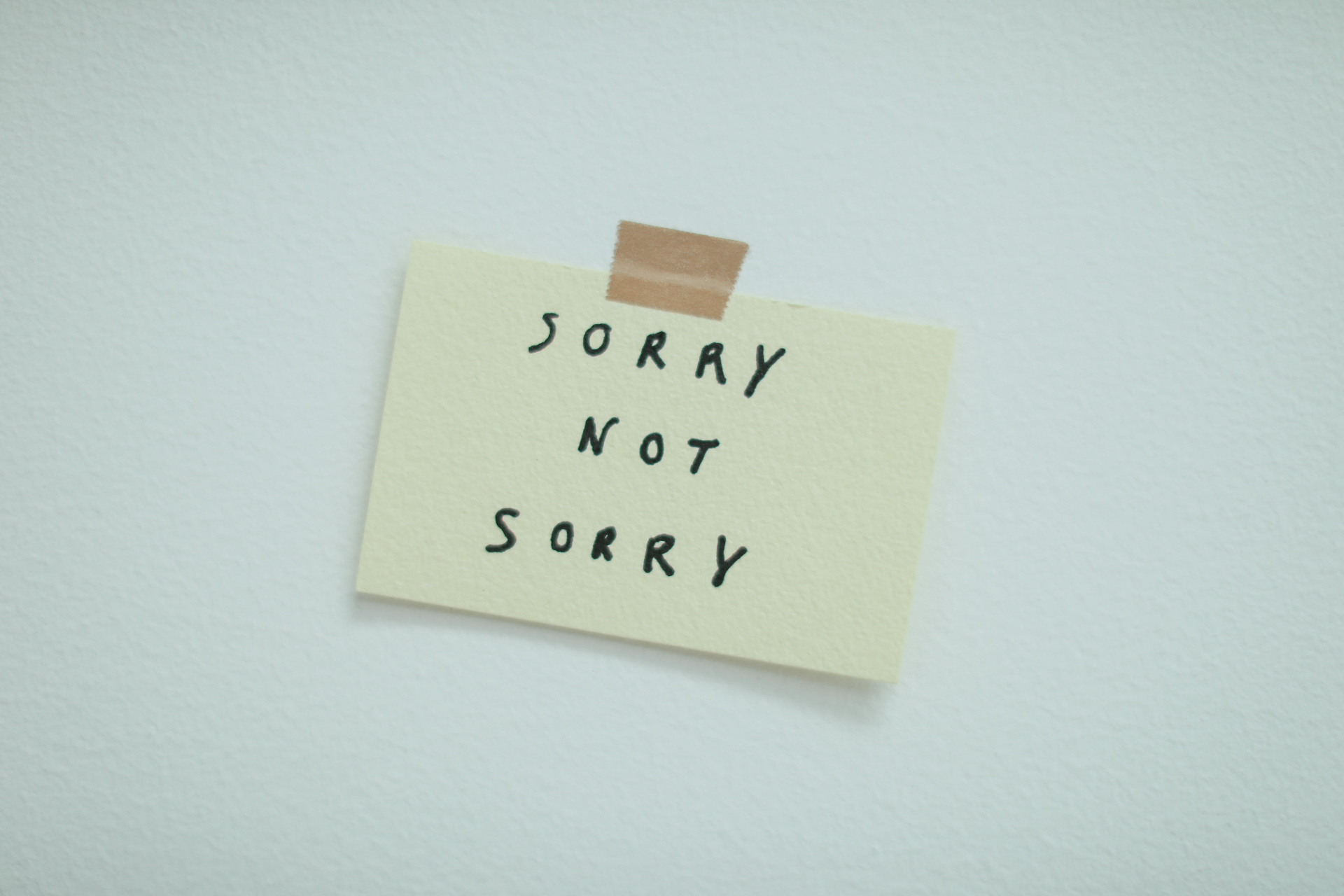
Beyond the Burden: Why Saying “I’m Sorry” Is So Hard (And How to Heal)
We’ve all been there: that heavy, prickly sensation in the chest when we realize we’ve messed up. The logical part of our brain knows that a simple, “I’m sorry,” could bridge the gap, yet the words feel like they’re stuck behind a ten-foot-tall internal fortress.
If you find it excruciatingly hard to apologize or if you find yourself over-apologizing for things that aren’t your fault you aren’t “stubborn” or “mean.” There is a deep psychological architecture at play.
At Stride Forward Counseling, we often work with high-achievers, perfectionists, and those navigating ADHD who find that the word “sorry” carries a weight it shouldn’t. Let’s dive into why that is and how we can move past it.
The Psychology of the “Non-Apologizer”
Why is a five-letter word so threatening? For most, it isn’t about the mistake itself; it’s about what the mistake says about their identity.
1. The Threat to the “Good Person” Identity
For the high-functioning codependent, identity is often built on being “The Reliable One,” “The Helper,” or “The One Who Has It Together.” When you make a mistake, it creates cognitive dissonance. Your brain struggles to hold two truths at once: “I am a good person” and “I did something that hurt someone.” For many, admitting a mistake feels like admitting they are a “bad person” altogether.
2. Shame vs. Guilt
There is a massive difference between guilt and shame.
Guilt says: “I did something bad.” (Behavior-focused)
Shame says: “I am bad.” (Identity-focused)
If an apology triggers deep-seated shame, your nervous system will treat the apology as a life-or-death threat. To protect yourself, you might pivot to defensiveness, “gaslighting,” or withdrawing.
3. The ADHD Factor: Rejection Sensitive Dysphoria (RSD)
For those with ADHD, the struggle to apologize is often linked to RSD. An apology is a formal acknowledgment of a “fail,” which can trigger an intense, painful emotional reaction. If you’ve spent a lifetime being criticized for “forgetting” or “missing details,” one more apology feels like the straw that breaks the camel’s back.
The Stoic Pivot: Reframing the Apology
In our practice, we often use Stoic principles to help clients ground themselves. Epictetus famously taught that we don’t control the “weather” (other people’s reactions), but we do control our “ship” (our character).
An apology is an act of integrity, not an act of submission. When you say sorry, you aren’t “losing” a power struggle; you are taking command of your character. You are saying, “My value as a human is so secure that I can afford to be wrong.”
How to Give a “Clean” Apology
If you’re ready to break the cycle of defensiveness, try the Three-Step Apology framework:
Acknowledge the Impact (Not the Intent): Stop saying “I didn’t mean to.” It doesn’t matter. Focus on the result. “I see that my comment made you feel unheard.”
Ditch the “But”: The moment you say, “I’m sorry, but…” you have cancelled the apology. A clean apology has no “buts.”
The Repair Offer: Ask, “What can I do to make this right or ensure it doesn’t happen again?” This moves you out of the “shame spiral” and into “action mode.”
Moving Stride Forward
Healing the way we apologize is a cornerstone of building healthy, interdependent relationships. Whether you are struggling with the “perfectionist panic” of making a mistake or navigating the emotional regulation challenges of ADHD, you don’t have to do it alone.
If you are in the Columbia, Ellicott City, or greater Howard County area and are looking to improve your relationship dynamics and emotional resilience, we are here to help.
Ready to take the next step? Contact Stride Forward Counseling today to schedule a session. Let’s work on lowering the drawbridge to that internal fortress, together.